

Cream Bronzer for Pale Skin: How to Choose Your Shade
Last Updated: November 6, 2026
Quick Summary
To choose the right cream bronzer for pale skin, match it to your undertone first, then pick a depth one to two shades deeper than your natural skin tone. Swatch three stripes along your jawline in daylight and blend into your neck, since undertone mismatch causes orange or muddy results far more often than depth alone.
- Judge undertone using three signals: wrist veins, sun reaction, and jewellery or fabric in daylight.
- Cool undertones need neutral-to-cool taupe or rosy-brown bronzers; warm undertones need golden or amber bases.
- Test on the jawline, not the back of the hand, which is often deeper and warmer than a pale face.
- Grey means too cool, orange or rusty means too warm, and a dark band means the shade is too deep.
- Buy for your winter-pale depth and build a second thin layer in summer rather than going darker.
Table of Contents
- Start With Your Undertone, Not the Shade Name
- Matching Cream Bronzer Depth to Fair and Light Skin
- How to Apply Cream Bronzer So It Looks Like Skin
- Cream vs Powder Bronzer for Pale and Mature Skin
- Frequently Asked Questions
Start With Your Undertone, Not the Shade Name
Choosing the right cream bronzer for pale skin starts with your undertone, not the label.
The wrist-vein test is a useful starting point but unreliable alone, especially for very fair skin where veins can read blue, green and purple at once. Use it as one of three signals, judged in daylight.
Signal one: wrist veins. In indirect daylight, blue or purple veins suggest cool; green or olive suggest warm; a mix suggests neutral. If your veins are hard to read, our makeup undertone matching guide walks through more tests.
Signal two: sun reaction. Fair skin that burns quickly and rarely tans usually leans cool; skin that tans gradually and rarely burns leans warm; skin that burns then tans often sits neutral.
Signal three: jewellery and fabric. Hold silver and gold against your bare jaw in daylight: silver flattering suggests cool, gold suggests warm, both suggests neutral. The same logic applies to a white versus cream collar.
- Cool undertone: choose a neutral-to-cool bronzer with a soft taupe or rosy-brown base. Avoid golden, honey or peachy shades, which pull orange on cool pale skin.
- Warm undertone: choose a golden, amber or soft peachy-brown base. Avoid grey or ashy taupe shades, which look like dirt rather than warmth.
- Neutral undertone: choose a balanced soft brown with neither a strong gold nor grey cast. Neutral pale skin can wear either leaning at low intensity, making it the easiest to shop for.
Watch out: a shade can be the right depth and still the wrong undertone, and undertone mismatch produces the orange or muddy result far more often than depth alone. Grey means too cool; rusty means too warm.
This is where bronzer and contour part ways on very fair skin. Bronzer adds warmth and should lean warm or neutral-warm; contour sculpts and should lean cooler and greyer than your skin.
Matching Cream Bronzer Depth to Fair and Light Skin
The right depth for pale skin is one to two shades deeper than your natural skin tone, never more. Go darker and the colour sits on top of your face like a stripe.
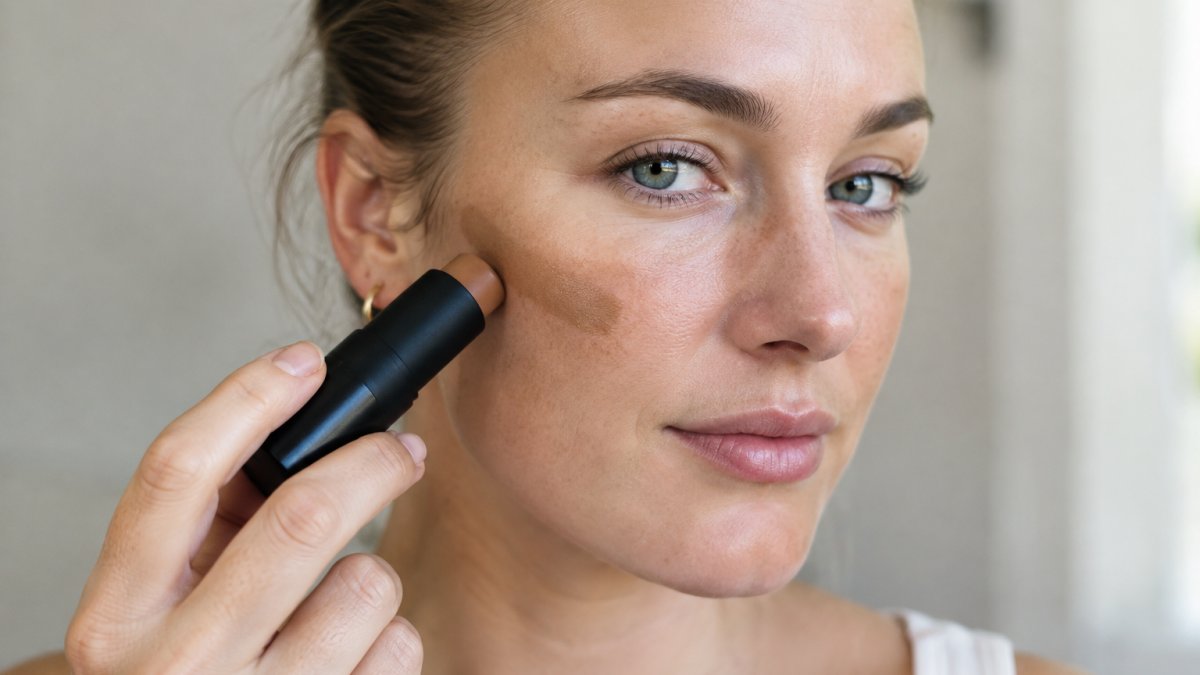
Depth is easier to judge with a repeatable process than a single swipe, which catches more mismatches than testing on the back of the hand.
- Test in daylight. Stand near a window with indirect natural light. Warm bathroom lighting flatters warm bronzers and hides orange casts.
- Swatch three stripes, not one. Apply a thin stripe of your closest match, one shade lighter and one shade darker along your jawline, blending each lower edge into your neck.
- Judge after blending, not wet. Wait a minute, then check which stripe sits just visible against your neck without reading as a stripe. You want a light tan, not a shadow.
- Read the failure modes. Disappears into your neck: too close to your skin tone. Grey or ashy: too cool. Orange or rusty: too warm. A dark band: too deep.
- Check the blended edge, not the centre. A clean, soft transition means depth and undertone are close; a visible line means the shade is too deep or the undertone is off.
Pale skin often needs less depth than the label suggests. A shade marketed as "light" can still be two or three steps too deep for very fair skin, so always swatch.
Many pale people are one shade lighter in winter and one deeper in summer, so buy for your winter-pale depth and build a second thin layer in summer.
Our Bronzer Stick is buildable, so start sheer and add more. If unsure between two shades, upload a selfie through our contact form to get help finding your match.

Watch out: testing on the back of the hand is the most common cause of a wrong shade, because the hand is often deeper and warmer than a pale face. Always test on the jawline and blend into the neck.
Judge depth with a repeatable daylight test rather than a single swipe.
| Step | What to do | What it tells you |
|---|---|---|
| Test in daylight | Stand near a window with indirect natural light | Warm bathroom lighting hides orange casts |
| Swatch three stripes | Closest match, one lighter, one darker along jawline | Blends each lower edge into the neck |
| Judge after blending | Wait a minute, then check the stripes | Want a light tan, not a shadow |
| Read failure modes | Disappears: too close; grey: too cool; orange: too warm | A dark band means too deep |
| Check the blended edge | Look at the transition, not the centre | Visible line means too deep or wrong undertone |
How to Apply Cream Bronzer So It Looks Like Skin
Cream bronzer looks most natural applied in thin layers and blended upward, not downward. The goal is a soft wash of warmth, not a carved line.
- Warm a small amount on the back of your hand or swipe the stick lightly.
- Tap along your cheekbones, the top of your forehead, and your jawline.
- Blend upward and outward toward your hairline with fingertips or a brush.
- Build a second thin layer only where you want more depth.
A common mistake is applying too much at once. Start with less than you think you need. Cream formulas move with your skin and tend to settle less than powder into fine lines. If you are new to cream products, our cream contour for beginners guide covers blending and placement.
Cream vs Powder Bronzer for Pale and Mature Skin
Cream bronzer is often a good choice for pale and mature skin because it can blend into the skin rather than sitting on top. Powder can cling to dry patches and settle into fine lines. Cream formulas can give a dewy, natural finish and are generally forgiving if you over-apply.
That said, powder still has a place if you have oily skin or want a matte finish. The trick with either is a light hand. If you go cream and want to set your makeup without powder, our guide to setting makeup without powder shows how to keep the finish fresh.
Many people with mature skin prefer cream formulas for a radiant finish. For a full routine that looks like skin rather than a mask, see our mature makeup guide.
Picking a bronzer shade for pale skin comes down to undertone, depth and a light hand. If you would rather not guess, we can help. Max and Louie is a New Zealand-owned vegan makeup brand, and our Bronzer Stick is made for skin that has lived a little, with a creamy formula that blends with your fingertips. Send us a selfie through our contact form and founder Nat will match your shade personally. Get started with Max and Louie and find the warmth that looks like you.
Frequently Asked Questions
How do I choose a cream bronzer shade for pale skin?
Pick a cream bronzer one to two shades deeper than your natural skin tone, then check the undertone. Pale skin usually suits a neutral or cool-toned bronzer because warm, orange-based shades turn muddy fast. Swipe a small amount along your jawline and blend it in daylight. If it disappears into your neck, it is too light. If it looks like a stripe, it is too dark. The Bronzer Stick from Max and Louie is $39 and you can upload a selfie for a shade match before ordering.
Should pale skin use warm or cool-toned bronzer?
Cool and neutral undertones are the safer starting point for fair skin. A cool-toned bronzer reads as shadow and warmth rather than orange, which is the usual complaint on pale complexions. Warm undertones can work if your skin itself leans golden, but test on the jawline first. If the colour looks orange once blended, try a cooler or more neutral shade.
Is cream or powder bronzer better for dry or mature skin?
Cream bronzer generally suits dry and mature skin better because it melts into the skin instead of sitting on top of it. Powder can catch on dry patches and may settle into fine lines. A cream formula like the Max and Louie Bronzer Stick ($39) blends with fingertips and stays buildable, so you control how much colour lands. Powder still works if you set it lightly, but cream gives a dewier, more natural-looking finish.
